A Cardiovascular Scientist Spent 15 Years Asking Why His Patients Were Still Deficient Despite Spending $312 a Month on Supplements. Here's What He Found.
After publishing over 200 peer-reviewed papers on cardiovascular nutrition, Dr. James DiNicolantonio discovered something that most supplement companies do not want their customers to know. The routine most Americans over 50 follow every morning is not just failing — it is actively making things worse.

He has reviewed thousands of blood panels.
For fifteen years, the same pattern kept appearing.
Patients spending $200, $300, sometimes $400 a month on supplements. Taking them without fail. Never missing a morning.
Coming back deficient.
Not occasionally. Consistently. Across nutrients they were specifically supplementing.
Dr. James DiNicolantonio is a cardiovascular research scientist at Saint Luke's Mid America Heart Institute. He has published over 200 peer-reviewed papers. He has spent his career studying what actually happens when the human body tries to absorb the supplements most Americans over 50 take every day.
What he found — and what most supplement companies have no interest in telling you — is that the conventional supplement stack is not just underperforming.
For many people, it is making things worse.

The Patient Who Finally Made It Click
The case that crystallized it happened about three years ago.
A 58-year-old man came in for a cardiovascular checkup. He was meticulous about his health. He had read everything. He was taking twelve supplements — a multivitamin, vitamin D3, K2, CoQ10, magnesium, zinc, fish oil, a B-complex, vitamin C, a probiotic, glucosamine, and ashwagandha.
Total spend: $312 a month.
His blood panel came back with low CoQ10 levels. Signs of copper deficiency. And B12 absorption markers that suggested his body was barely using the supplement at all.
He was supplementing CoQ10. He was supplementing B12. He was supplementing zinc for immune support.
And the zinc was blocking his copper. The B12 form his body couldn't convert. The CoQ10 dose was a fraction of what research shows is needed for measurable effect.
That patient is not unusual.
"I turned 60 last year, I had joint aches, felt sluggish and had some brain fog. I couldn't keep a consistent supplement routine, too many to swallow." — Verified Trustpilot review, 5 stars
Dr. DiNicolantonio says he has had a version of this same conversation hundreds of times.

What the Federal Government Said — and What Supplement Companies Never Mention
Most Americans over 50 don't realize this. But the U.S. government has effectively told them to stop.
In 2022, the U.S. Preventive Services Task Force — the same federal panel that sets the national standard for mammograms and colonoscopies — published a recommendation in the Journal of the American Medical Association.
The conclusion, in their own words:
"The USPSTF recommends against the use of beta carotene or vitamin E supplements for the prevention of cardiovascular disease or cancer." — U.S. Preventive Services Task Force, JAMA 2022
For multivitamins specifically, they said the evidence was "insufficient" — the panel could not find proof they reduce heart disease, cancer, or all-cause mortality.1
In 2024, JAMA Network Open published a study tracking 390,124 adults for over 20 years. The conclusion: daily multivitamin use was not associated with lower mortality. None.2
An editorial in the Annals of Internal Medicine put it plainly:
"Most supplements do not prevent chronic disease or death, their use is not justified, and they should be avoided." — Annals of Internal Medicine3
This is not the opinion of fringe researchers. This is the consensus of the institutions that train the cardiologists most Americans trust with their lives.
Dr. DiNicolantonio's view differs from the loudest critics — but not in the direction most people expect.
"The science is not telling people to stop supplementing," he says. "It is telling people to stop doing it the way most people do it."

The Three Structural Failures He Found in Almost Every Cabinet
After fifteen years of reviewing what his patients take and comparing it against what their blood panels show, Dr. DiNicolantonio identified three specific failures that appear in nearly every supplement routine he has seen.
Failure one: sub-clinical doses.
The amount of CoQ10 in a typical multivitamin is around 30mg. The amount studied in humans for cardiovascular and mitochondrial energy benefit is closer to 100–200mg. The 30mg is, in research circles, called "fairy dusting" — just enough to put on the label, not enough to move a clinical marker.
"I see patients supplementing CoQ10 for years," he says. "And their CoQ10 levels don't move. Because the dose they're taking is less than a third of what the research uses."
Failure two: the wrong chemical form.
Up to 60% of adults carry an MTHFR genetic variant that limits their ability to convert synthetic folic acid into the active form the body uses. Most multivitamins still use the cheap synthetic. The same problem applies to B12 — cyanocobalamin versus methylcobalamin — and to magnesium, where oxide absorbs at roughly 4% compared to glycinate.
Failure three: the stack is at war with itself.
This is the one that took Dr. DiNicolantonio the longest to fully document — and it is the one almost nobody in the supplement industry discusses, because the solution requires selling one product instead of twelve.
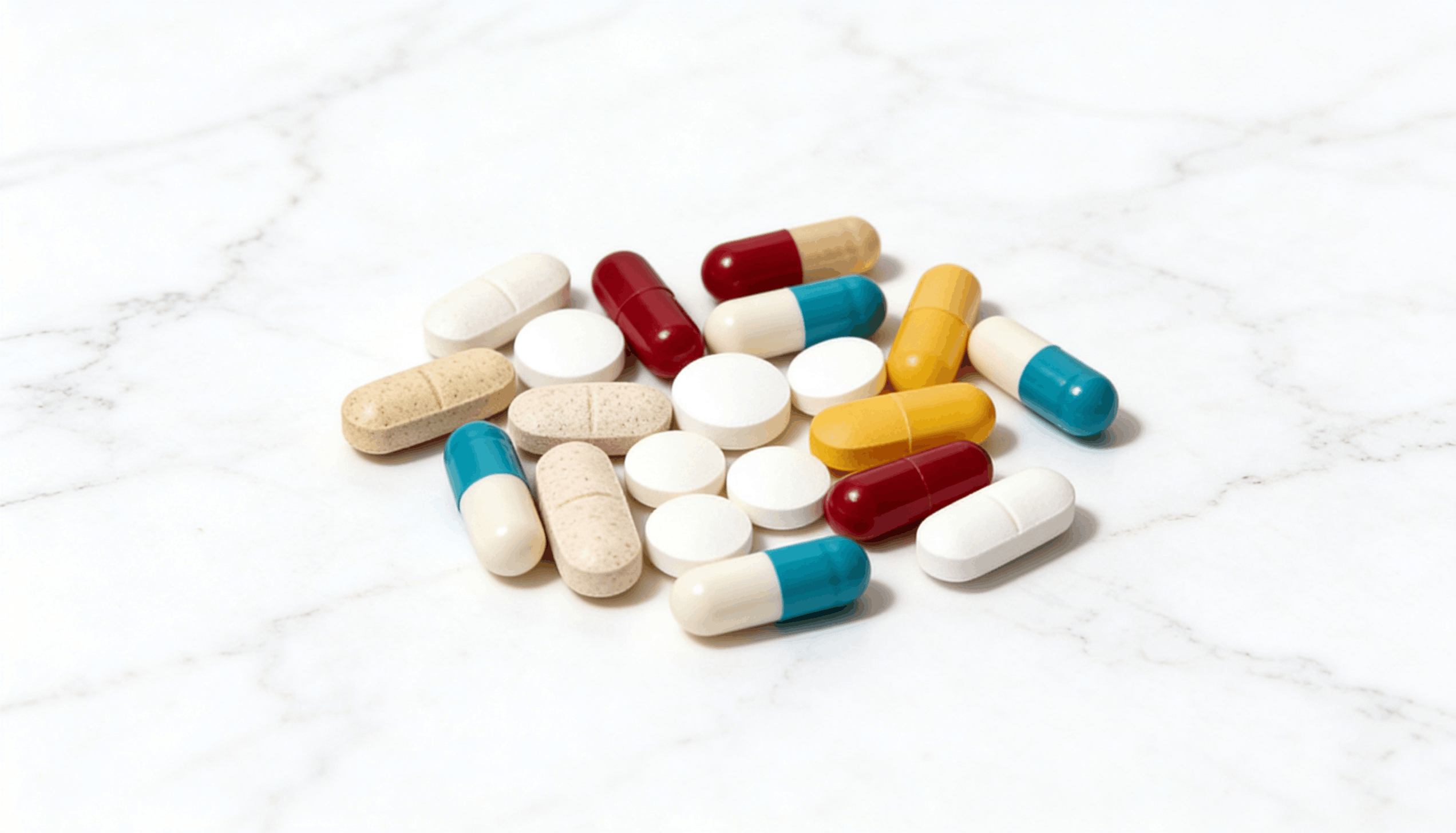
The Absorption War Happening in Your Gut Every Morning
Take calcium and iron together — standard in most "50+" multivitamins — and calcium can blunt iron absorption by up to roughly 50% when both are taken at supplemental doses.4
Take 50mg of zinc for immune support — also standard — and you can block copper absorption by up to 50% within the same dose. Within four to six weeks, the zinc habit can quietly leave you copper-depleted.5
Vitamin C at high doses interferes with B12. Magnesium oxide absorbs at around 4% compared to magnesium glycinate. And cyanocobalamin B12 is significantly less usable for the millions of adults with MTHFR variants.
"The math is brutal," Dr. DiNicolantonio says. "Most of the $312 a month is going down the toilet. Literally."
"What your patients need is not more supplements. What they need is fewer supplements that actually work."
The Turning Point
In 2024, the team behind IM8 Health — the supplement brand co-founded by David Beckham and backed by Prenetics, a NASDAQ-listed biotechnology company — approached Dr. DiNicolantonio about joining their Scientific Advisory Board.
He did what any research scientist would do.
He read the clinical trial protocol before agreeing to anything. He read the ingredient panel line by line, checking every dose against the peer-reviewed thresholds he had spent fifteen years studying. He read the names of the other advisors:
- Dr. Dawn Mussallem — Mayo Clinic Oncologist, CMO Fountain Life, Stage IV cancer survivor, heart transplant recipient, first person to run a full marathon within one year of a heart transplant
- Dr. James L. Green — Former Chief Scientist, NASA, 42 years
- Dr. David Katz — Founding Director, Yale-Griffin Prevention Research Center
- Prof. Suzanne Devkota — Director, Cedars-Sinai Microbiome Research Institute
Then he checked the one thing that separates a supplement company making claims from one that has actually proven them.
IM8 had conducted a 12-week randomized, controlled clinical trial on their actual finished formula — not on isolated ingredients, but on the product as it ships — conducted by the San Francisco Research Institute and published on the National Library of Medicine.
He signed.
He is now a Scientific Advisor to IM8 Health.
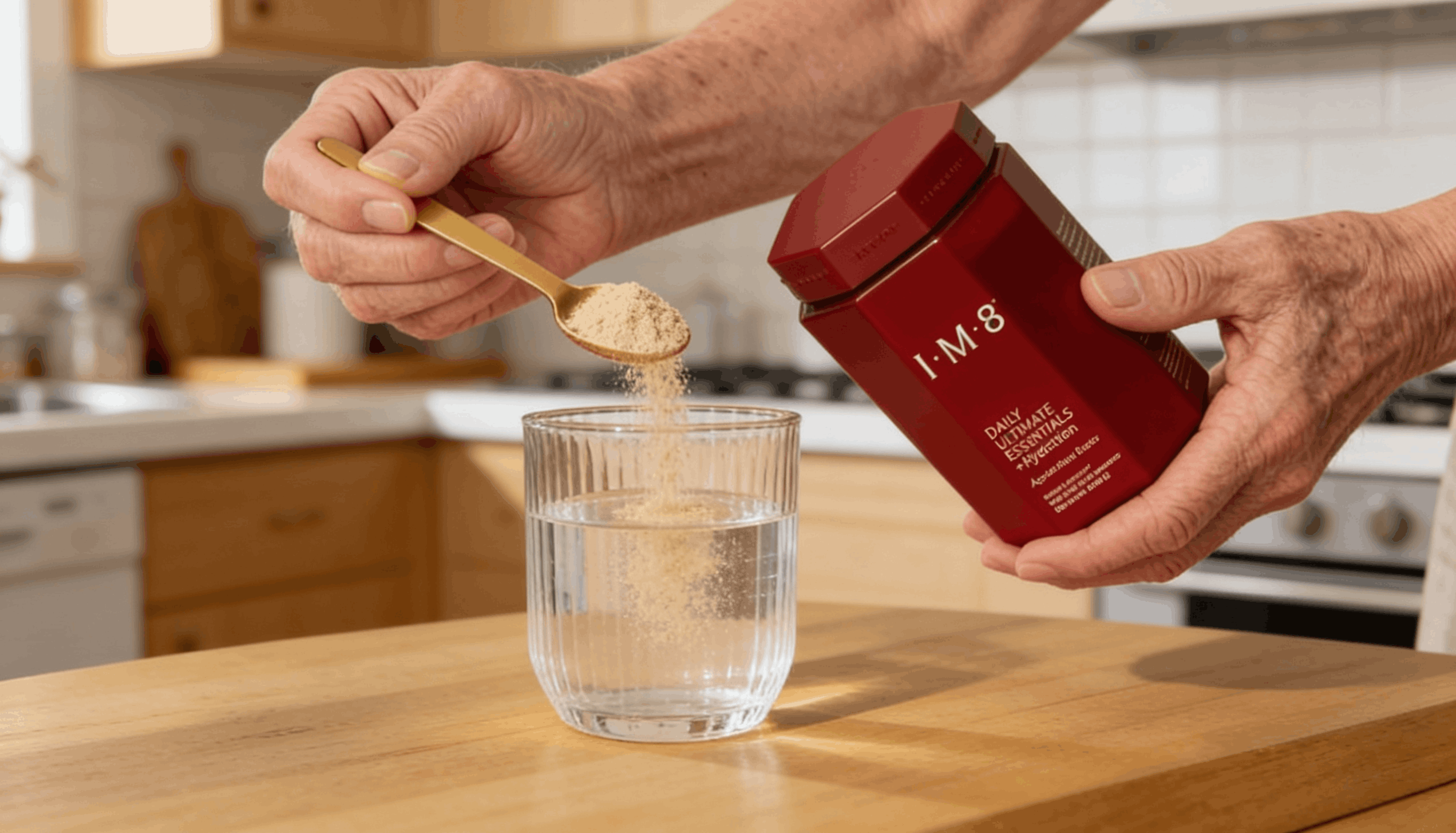
What's Actually in the Scoop
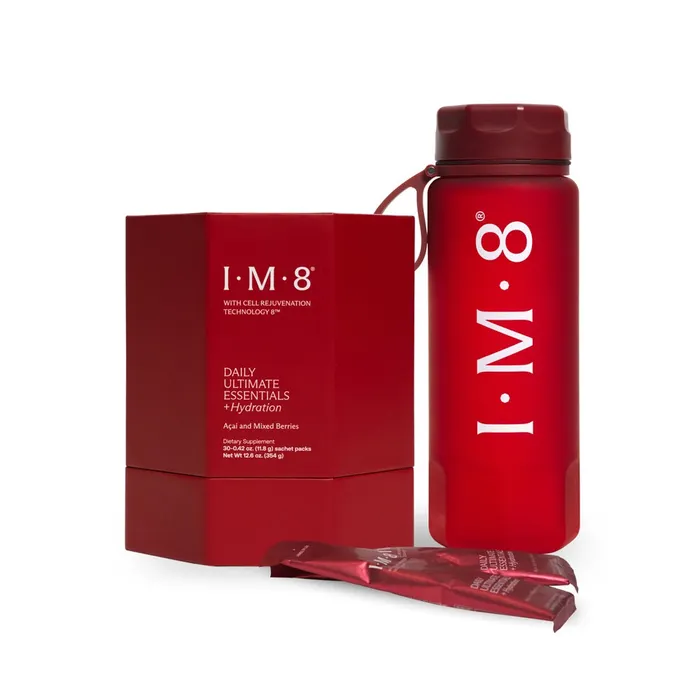
The product Dr. DiNicolantonio signed his name to is called IM8 Daily Ultimate Essentials. It is a single-scoop powder taken once a day in water.
The reason it can deliver what twelve bottles cannot comes down to a simple physical fact. A 12-gram powder scoop holds roughly 1,100% more active ingredient than a standard capsule. At that volume, you can actually hit the doses the research uses — not the doses that fit on a label.
- 90 precision-optimized ingredients in a single daily drink
- CoQ10 at 100mg — the clinical dose. Not 30mg. Not fairy-dusted.
- MSM at 1,500mg for joint support — a dose physically impossible in a standard capsule
- Vitamin C at 900mg (1,000% daily value)
- Vitamin D3 at 50mcg in the plant-based lichen-derived form (VegD3®)
- B12 as methylcobalamin at 200mcg — the bioactive form that bypasses the MTHFR conversion problem
- Magnesium as bisglycinate chelate — the form that actually reaches the brain. Not the 4%-absorbed oxide.
- Complete 3-part gut system: 3g prebiotic fibre + 10 billion CFU probiotics (stomach acid-surviving strains DE111® and BC99®) + FloraSMART® postbiotics
- NSF Certified for Sport — tested against 280+ banned substances, heavy metals, contaminants. The same standard trusted by the NFL, MLB, NHL, and WADA.
And the clinical trial:
- 95% of participants reported a noticeable boost in daily energy
- 85% felt less bloated with improved digestion
- 80% reported getting better sleep
- 75% noticed sharper focus and mental clarity
Not from ingredient studies. From the actual product. Tested as it ships.
And the One Credential That Almost No Supplement Brand Has
IM8 Daily Ultimate Essentials is now stocked on store.mayoclinic.com — the retail outlet of the #1-ranked U.S. hospital per U.S. News & World Report.
Three distinct SKUs are live as of this writing — the Jar, the Travel Sachets, and the Gusset Bag — all flagged HSA/FSA eligible.7
The Mayo Clinic Store is not a medical endorsement. It is a retail listing. But Mayo Clinic is famously conservative about which supplement brands they will stock under their own name. The number of greens-powder brands that have reached that shelf is extremely short.
The Math Dr. DiNicolantonio Walks His Patients Through
This is the part most people resist — because the supplement industry profits from selling twelve bottles, not one.
| Item | Conventional Stack | IM8 Daily Ultimate Essentials |
|---|---|---|
| Multivitamin | $20 | included |
| Vitamin D3 + K2 | $33 | included |
| B-complex (methylated) | $25 | included |
| CoQ10 (100mg, ubiquinol) | $30 | included |
| Magnesium glycinate | $18 | included |
| Omega-3 fish oil | $40 | included |
| Probiotic (quality strain) | $35 | included |
| Greens powder | $35 | included |
| Joint support (MSM 1,500mg) | $25 | included |
| Adaptogen complex | $15 | included |
| Postbiotic / digestive enzymes | $35 | included |
| Monthly total | ~$311–$347 | $89 |
Switch the stack for one scoop and you save approximately $222 a month. Over a year: $2,664.
You also stop the calcium-iron, zinc-copper, and Vitamin-C-B12 absorption conflicts happening in your gut every morning.
And IM8 is HSA/FSA eligible with a 98% approval rate — meaning the actual out-of-pocket cost can drop to as low as $62 a month for many adults.
Try IM8 — 90-Day Money-Back Guarantee →$2.61/serving · Free shipping · HSA/FSA eligible at checkout
What People Actually Report After 90 Days
The 12-week clinical trial outcomes are one measure. Across 700,000+ customer purchases and 16,255 verified Trustpilot reviews averaging 4.8 stars, the pattern Dr. DiNicolantonio says he sees most often in patients who switch:
- Weeks 2–3: The 3 p.m. energy slump softens — usually the first thing people notice
- Weeks 4–6: Morning brain fog begins to lift
- Weeks 6–10: Joint stiffness shifts — MSM needs time to accumulate to therapeutic levels
- Weeks 10–12: Sleep tends to be the last to change, but it changes
"I was spending more than $200 per month on separate supplements and still not feeling right. My annual blood work — all vitamin levels were beyond amazing. My doctor said 'whatever you're doing, keep it up.' IM8 was the only thing I'd changed." — Beverly Rob · Verified Trustpilot, 5 stars
"I'm into the 90-day milestone. Definitely feeling more energy, recovering faster from workouts, and my digestive health has genuinely improved." — Verified Trustpilot, 5 stars · 90-day user
"Honestly, I find the flavour too intense — but the fact that my stubbornly high LDL cholesterol fell into the normal range after only one month tells me something in here is genuinely working." — Verified Trustpilot, 4 stars
How To Try It
For readers who have made it this far, the plain-English breakdown:
- One-time, 30-day jar: $112 ($3.73/serving). Good for trying.
- Monthly subscription: $89 every 4 weeks ($2.97/serving). Save 20%. 30-day money-back guarantee.
- Quarterly subscription: $235 every 12 weeks ($2.61/serving). Save 30%. 90-Day Money Back, No Questions Asked.
The quarterly plan is the one most readers are choosing — because the 90-day guarantee gives you the full clinical-trial-length runway to actually feel the difference before committing.
If after 90 days you don't feel the change that 95% of trial participants describe, you ship the remaining product back and get a full refund. No questions. No phone-tree.
Free shipping in the US, Canada, UK, and EU. HSA/FSA eligible at checkout (98% approval rate).
Try IM8 Daily Ultimate Essentials — 90-Day Money Back →$2.61/serving · Free shipping · HSA/FSA eligible at checkout

A Final Note from Dr. DiNicolantonio
After fifteen years of seeing the same result on the same blood panels:
"The problem was never whether to supplement. The problem was always how. Nutrients at sub-clinical doses don't move markers. Nutrients in the wrong form don't absorb. And nutrients competing for the same pathways cancel each other out. Once you understand those three failures, the solution becomes obvious — and it isn't adding another bottle to the cabinet." — Dr. James DiNicolantonio, Scientific Advisor, IM8 Health
Cardiovascular Research Scientist · Saint Luke's Mid America Heart Institute · 200+ peer-reviewed publications

For most readers over 50, the question is no longer whether to supplement.
It is whether to keep paying $312 a month for a stack that is fighting itself — or to replace it with one scoop, formulated at the doses research actually uses, by scientists who have spent their careers studying exactly why the conventional approach fails.
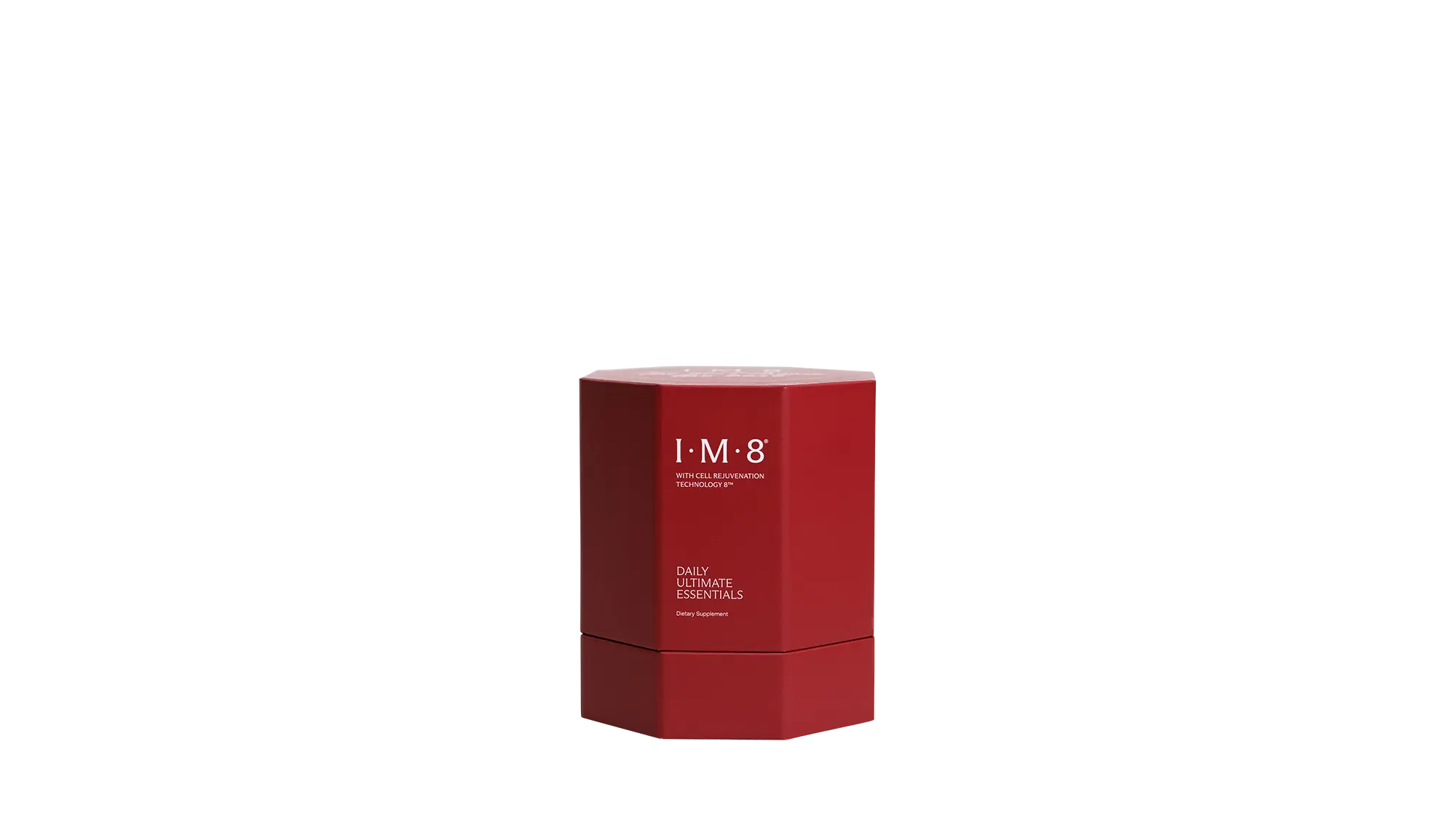
- 90 ingredients in one scoop
- NSF Certified for Sport
- Stocked on the Mayo Clinic Store
- 12-week RCT on finished formula Try It — 90-Day Guarantee →
90-day money-back, no questions asked. HSA/FSA eligible.

