Health & Wellness › Sleep & Recovery › Adults 50+
Why So Many People Over 50 Can't Sleep - And The Real Reason Their Supplements Aren't Working

Millions of Americans over 50 are exhausted, can't sleep through the night, and feel like their body is slowly failing them. The real explanation has nothing to do with aging — and everything to do with what's missing at the cellular level.
Something changes around 50. Most people can feel it — even if they can't explain it. The sleep that used to come easily starts to feel like a negotiation. Energy that was once just there in the morning is gone before noon. The body takes longer to recover from things that never used to be a big deal.
Most people tell themselves: this is just what getting older feels like. You accept it. You adjust.
But it isn't aging. And you shouldn't have to accept it.
After 50, your body begins a slow, measurable depletion of one specific mineral — magnesium — and the symptoms that follow are so wide-ranging that most doctors address each one separately. The sleep problem gets one appointment. The anxiety gets another. The fatigue, the muscle tension, the brain fog — each one addressed in isolation, when they often share a single root cause.
And there's a specific reason why the magnesium supplement you may already be taking almost certainly isn't helping.
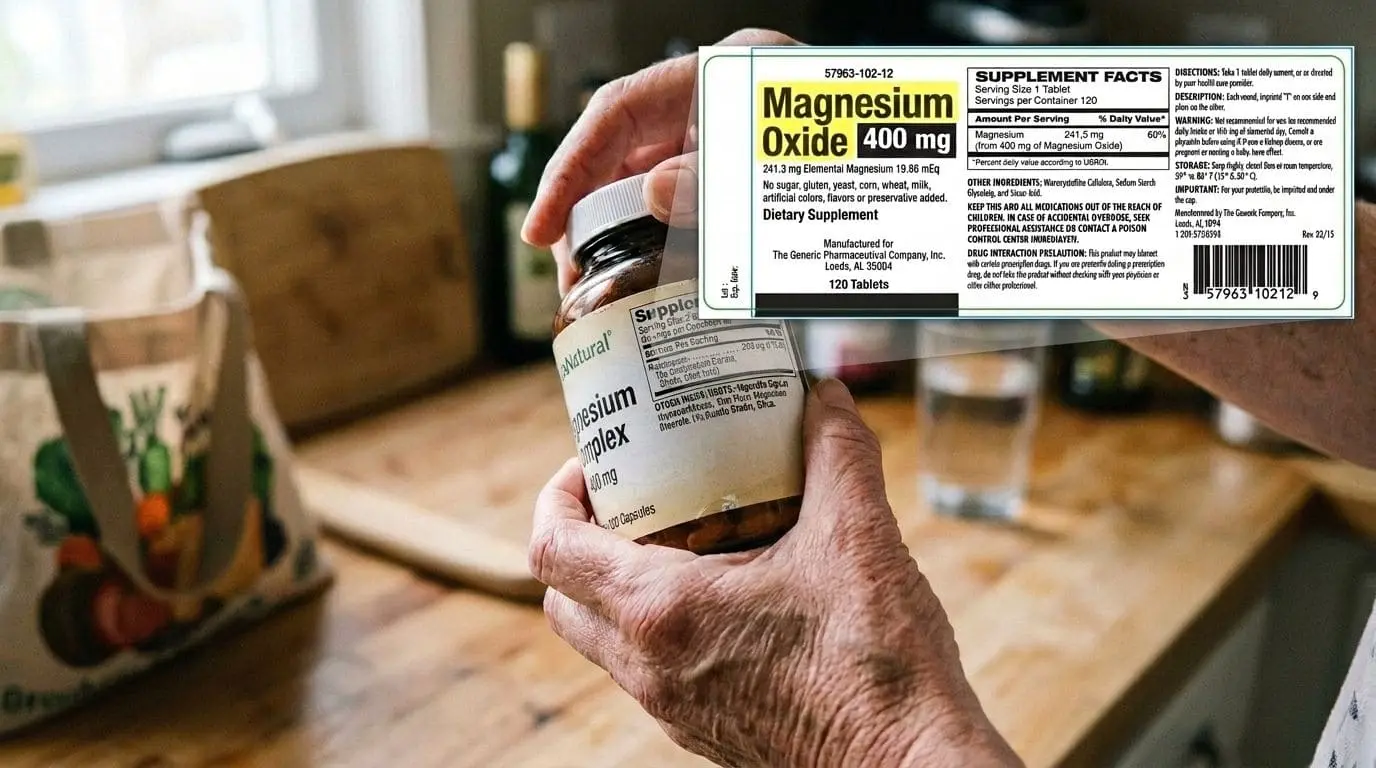
If you're taking magnesium, go find the bottle. Flip it over to the back label — not the front. Look for the word in parentheses after "Magnesium" in the ingredient list. If you see (as magnesium oxide) — or the word "buffered" anywhere — your body is absorbing roughly 4% of every dose. The other 96% is wasted. Keep reading to understand why.
What Actually Happens to Your Body After 50
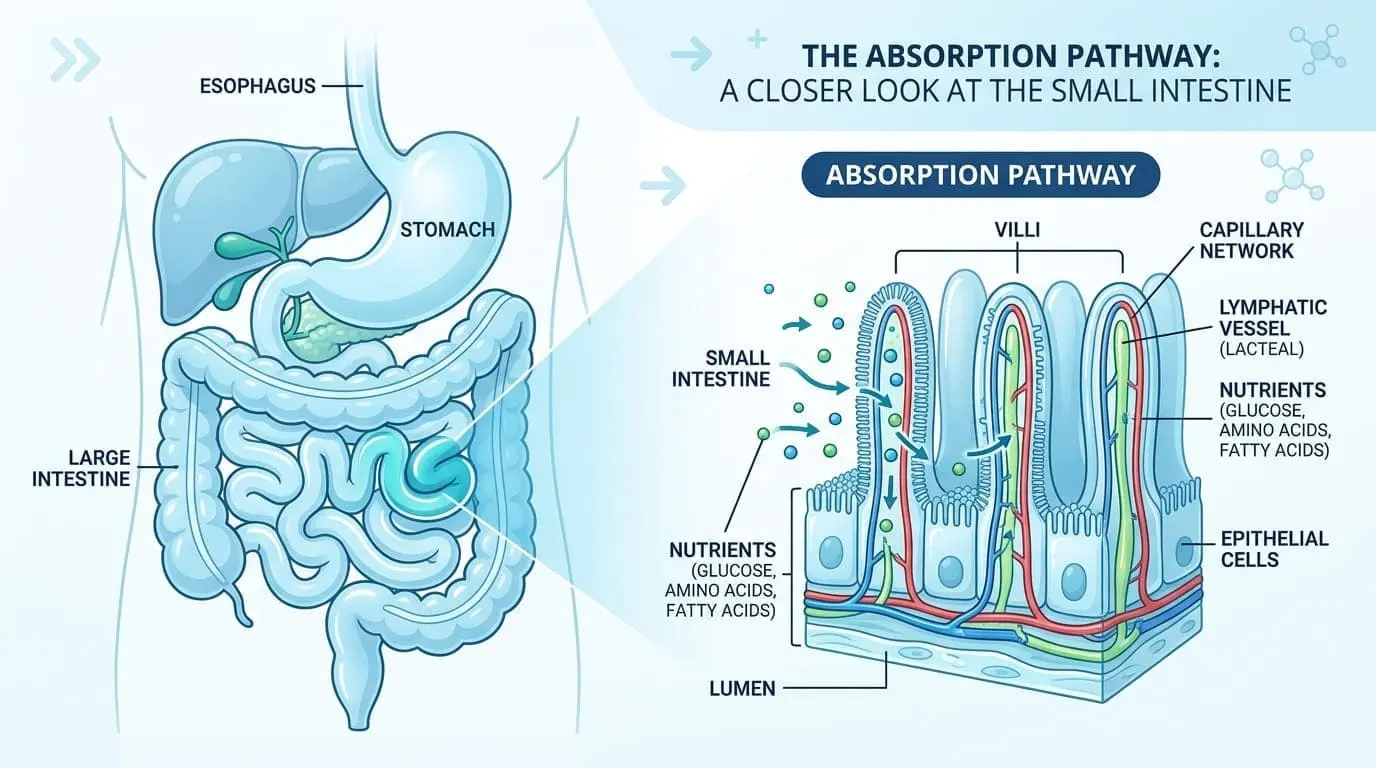
Magnesium is involved in more than 400 biological processes — sleep regulation, muscle relaxation, cortisol control, heart rhythm, nerve function, blood sugar balance, and more. Every one of these becomes more fragile when magnesium levels drop.
After 50, three things happen simultaneously that accelerate that drop:
Your gut absorbs less. Stomach acid production naturally declines with age. The gut lining becomes less efficient at extracting minerals from food and supplements. The same dose that worked adequately at 35 delivers a fraction of the mineral by 55.
Your kidneys hold onto less. After 50, the kidneys become less effective at conserving magnesium. Even when you eat well and take supplements, your body is excreting it faster than it can be replenished.
Chronic stress burns through it faster. Cortisol — which most adults over 50 carry in consistently elevated levels — actively depletes magnesium from cells. More stress means faster depletion. Faster depletion makes stress harder to manage. It is a cycle that feeds itself quietly, over years.
"Magnesium deficiency almost never shows up on standard blood tests — because the body strips it from muscles and bones to keep blood levels stable. By the time a blood test catches it, the cellular depletion has typically been going on for years."
This is why so many people over 50 feel like something is wrong — but every test comes back normal.
How Many of These Sound Familiar?

These are all documented symptoms of chronic magnesium depletion. Check how many apply to you:
- Waking up at 2–4 AM and lying there for hours
- Mind that won't stop racing at bedtime
- Nighttime leg cramps that jolt you awake
- Exhausted during the day, wired at night
- Anxiety that seems to have no clear cause
- Brain fog — losing words mid-sentence
- Belly fat that won't shift despite exercise
- Tight, tense muscles in your neck or shoulders
- Energy crash every afternoon around 2–3 PM
- Feeling on edge — short-tempered, easily overwhelmed
- Heart that flutters or races unexpectedly
- Headaches that come back around the temples
If three or more of those describe you, magnesium deficiency is almost certainly a significant part of what you're experiencing. Not because this article is trying to sell you something — but because these are the documented, well-established consequences of what happens when a mineral involved in 400 body processes drops below functional levels in adults over 50.
Why Your Magnesium Supplement Almost Certainly Isn't Working
Here's the part that makes most people angry when they hear it.
Most people, once they connect the dots, go buy magnesium. They pick up a bottle at the pharmacy, or order one online. The front label says "Magnesium Glycinate" or "High Absorption Complex." They take it every night for two months. Nothing changes. They conclude that magnesium doesn't work for them.
The bottle misled them.
Flip almost any mainstream magnesium supplement over and read the actual ingredient list on the back. You'll find this, in small print:
Magnesium (as magnesium oxide)
Magnesium oxide is a cheap industrial compound. Your body absorbs approximately 4% of it. The other 96% passes through your intestinal tract — pulling water in as it goes, which is where the cramping and diarrhea come from. It never reaches your cells. It cannot help you sleep, reduce your anxiety, relax your muscles, or do any of the things magnesium is supposed to do.
Oxide costs pennies per dose. Real, bioavailable magnesium costs ten times more to manufacture. So the industry prints "Glycinate" or "High Absorption" on the front while burying oxide on the back label. Technically within the law. Completely deceptive in practice.
If you've tried magnesium and felt nothing — this is why.

The Form That Actually Reaches Your Cells
Magnesium bisglycinate is structurally different from every other form of magnesium on the market.
"Bisglycinate" means that two glycine amino acid molecules are chemically bonded to each magnesium ion. Those glycine molecules act as a carrier — protecting the magnesium through your entire digestive system and delivering it directly into your cells, bypassing the absorption problems that make oxide ineffective, especially in people over 50.
But there's a second mechanism that most people don't know about. Glycine — the amino acid the magnesium is bonded to — is itself a calming neurotransmitter. It inhibits overactive neural circuits in the brain. So when you take bisglycinate before bed, you're getting magnesium for your muscles and nervous system, plus glycine to quiet the mental noise that keeps you staring at the ceiling at 2 AM.
This is why people who switch from oxide to bisglycinate describe the experience not as "falling asleep more easily" — but as their mind finally switching off. Often for the first time in years.
There's also a third factor that matters specifically for people over 50: the delivery format. Hard capsules depend on stomach acid to break down before absorption can happen. After 50, stomach acid production has declined enough that capsules often pass through without fully breaking down. Gummies absorb differently — your body considers them as food, and the magnesium begins absorbing almost immediately, through an entirely different pathway that doesn't depend on stomach acid levels.
Hearing It From Someone Who Was Exactly Where You Are
Reading about the science is one thing. Hearing it from someone who lived it — who was lying awake at 3 AM for years, who tried everything, who eventually found what actually worked — is something different.
What the First Month Actually Looks Like
Here is what customers over 50 consistently report — a realistic account of what changes, and when.
The mental noise that usually follows you to bed — the lists, the worries, the replay of the day — is noticeably softer. You fall asleep without the usual struggle. You may still wake briefly at your usual 3 AM hour out of habit. But instead of lying there for two hours, you drift back within minutes. When your alarm goes off, you lie still for a moment and do the math. Eight hours. You check your phone again to be sure.
It may happen once more. But the flood of anxiety that normally comes with it — the racing heart, the mental spiral — isn't there. You open your eyes, and the room is just quiet. You roll over. You go back to sleep. Like it's simply a thing a person does. You'd forgotten that was possible.
The chronic muscle tension in your neck and shoulders that you'd accepted as a permanent feature — it starts to ease. The afternoon crash that made the second half of every day feel like wading through fog is softer. A friend or partner says something: "You seem different." "You seem more like yourself." You realise you haven't dreaded going to bed in over a week.
The person who snapped at small things, forgot words mid-sentence, needed three coffees just to feel functional — that starts to feel like someone you used to be. The mental clarity that comes from consecutive nights of real sleep is something you genuinely forgot was available to you. Someone spills something. You just clean it up.
What People Are Saying
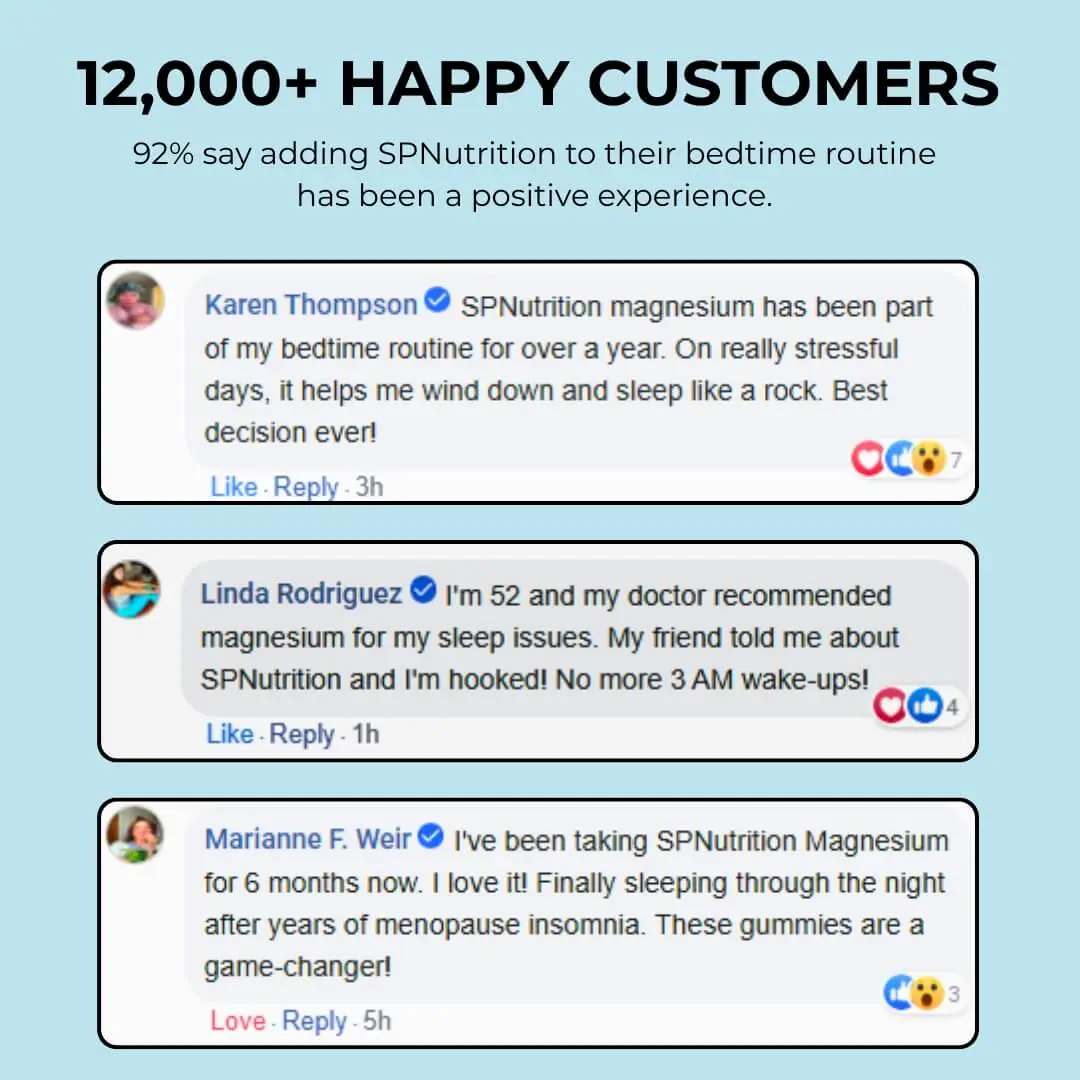
I took magnesium for two full years. Tried six different brands. Told everyone it didn't work for me. Every single one had oxide on the back label — I just never thought to look. Switched to SPNutrition bisglycinate gummies. First week — sleeping through the night. I am genuinely angry that no doctor explained this difference to me sooner.
54 years old. Belly fat that wouldn't move no matter what I tried at the gym. Broken sleep every night. A low-level anxiety I'd just accepted as normal life. Six weeks on SPNutrition. Sleep improved in week one. The anxiety started lifting by week three. My wife said I seemed like the person she married again. I didn't have a response to that — because she was right.
The leg cramps that woke me up screaming — sometimes twice a night — are completely gone. Two weeks. I had tried every magnesium at Walgreens and CVS. Nothing worked. It was always oxide. Always. SPNutrition was the first one that was actually what the label said. I've been sleeping through the night for three months. At 67. I wish I'd found this years ago.
I'm a 58-year-old woman who had accepted that poor sleep was just part of life after menopause. My doctor specifically mentioned bisglycinate and the gummy format. SPNutrition was the only product that had both — plus zero sugar. Within ten days I wasn't waking at 3 AM anymore. A month in I woke up one morning and felt like myself again. I actually cried.
Results Reported After Two Weeks

The Product These Doctors Are Recommending
To actually work for people over 50, a magnesium supplement needs three things — and finding all three together is genuinely rare:
Pure bisglycinate form. Not oxide, not "buffered," not "complex." 100% bisglycinate, confirmed on the back label — not just claimed on the front.
Gummy format. After 50, hard capsules often pass through without fully breaking down due to lower stomach acid levels. Gummies absorb through a completely different pathway — the body recognises them as food and absorption begins straight away.
Zero sugar. Most magnesium gummies contain 8–10 grams of sugar per serving. That sugar spike before bed disrupts sleep architecture — the very thing you're trying to improve.

Free US shipping · 106,472+ customers · No subscription required
Two Directions From Here

- Tonight: the same 3 AM ceiling
- Tomorrow: foggy, running on empty again
- Next month: try another oxide brand
- Six months: same question — "what is wrong with me?"
- The cycle continues unchanged
- Tonight: 2 gummies before bed
- This week: quieter mind, deeper sleep
- Next month: rested, clear, present
- Six months: sleep is no longer the first thing you think about
- You find out what you're like rested
Price increases on every restock. Current pricing is not guaranteed after sellout.
Free US shipping · 30-day money-back guarantee · While stock lasts

Dr K. Osei NB, Lawton C, Dr. M. Tran. The Effects of Magnesium Supplementation on Subjective Anxiety and Stress. Nutrients. 2017;9(5):429.
Held K, et al. Oral Mg²⁺ supplementation reverses age-related neuroendocrine and sleep EEG changes in humans. Pharmacopsychiatry. 2002;35(4):135-143.
Rosanoff A, Weaver CM, Rude RK. Suboptimal magnesium status in the United States: are the health consequences underestimated? Nutrition Reviews. 2012;70(3):153-164.
Schwalfenberg GK, Genuis SJ. The Importance of Magnesium in Clinical Healthcare. Scientifica. 2017;2017:4179326.
Pickering G, et al. Magnesium Status and Stress: The Vicious Circle Concept Revisited. Nutrients. 2020;12(12):3672.