Your Nervous System Isn't Broken. It's Trapped — And This Is What Finally Gets It Out

The emerging science of autonomic dysregulation explains why high performers feel exhausted, foggy, and wired all at once — and why a CE-marked medical device backed by 50+ clinical trials may be the most direct route back to baseline.
Something is happening to a specific type of person that medicine keeps getting catastrophically wrong.
They are not unwell in the way a GP appointment can fix. Their blood panels come back clean. Their heart scans are normal. Their thyroid looks fine. And yet they feel — as one of my patients described it — like they are "running a high-performance engine with the handbrake permanently on."
Chronic fatigue that sleep doesn't touch. A mind that races at 11pm and goes completely blank at 2pm. A gut that reacts to nothing and everything. A heart rate that spikes when they stand. A feeling almost impossible to articulate in a seven-minute GP appointment — that their body has simply stopped cooperating.
I have spent fifteen years studying the autonomic nervous system. And what I need to tell you — what I wish someone had told my patients years earlier — is this:
"Many of these people are not broken. Their nervous systems are dysregulated. That distinction changes everything — including what can actually be done about it."
— Dr. Sarah Holloway, Ph.D., Autonomic Neuroscience Researcher"I Was Doing Everything Right. So Why Did I Feel Like I Was Falling Apart?"

Allow me to tell you about someone I will call Marcus. Thirty-nine years old. Partner at a mid-sized consultancy. Two young children. By every external measure, thriving.
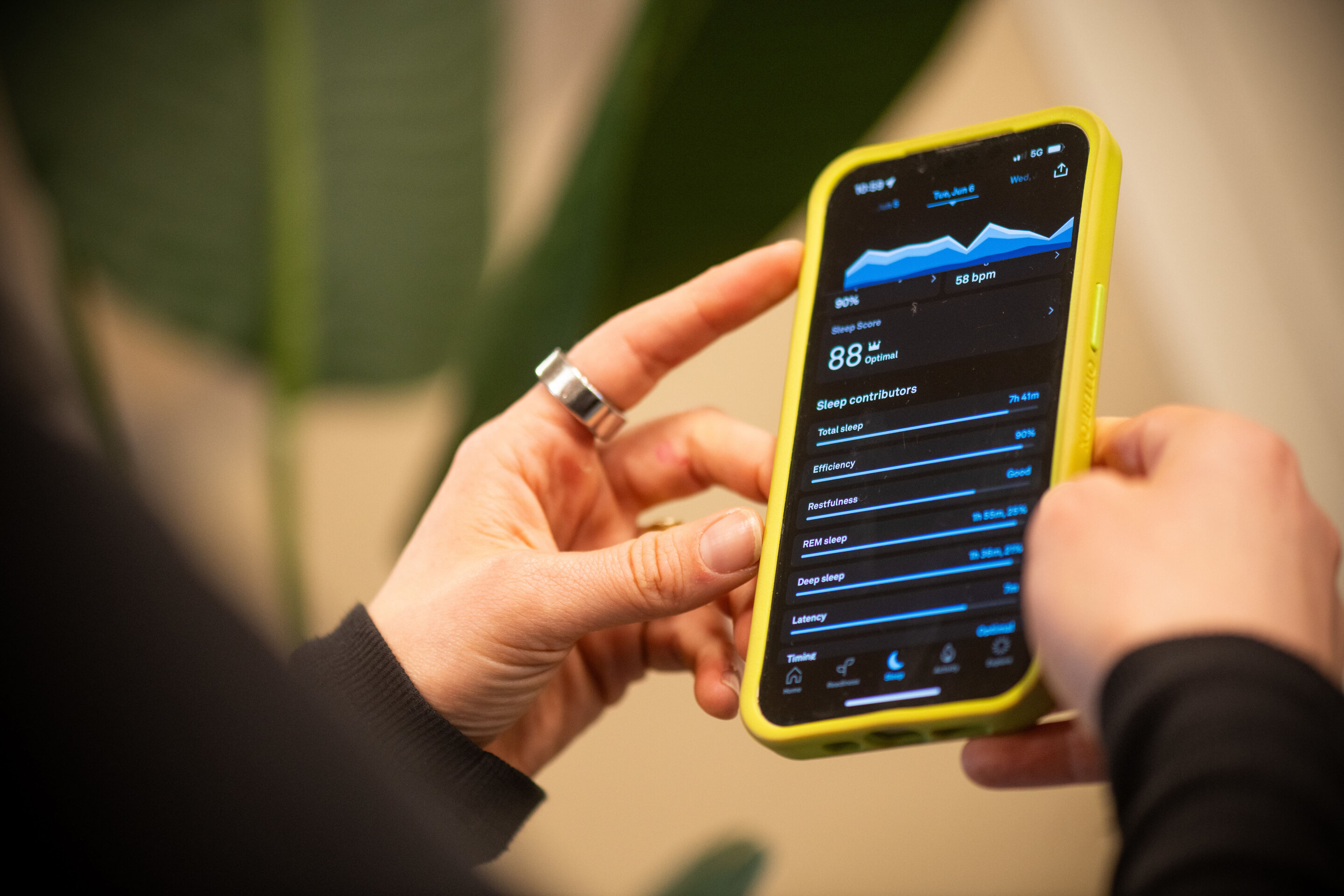
Marcus had tracked his sleep with a wearable for two years. He'd tried eliminating caffeine after midday, taking magnesium glycinate, doing box breathing before bed, cold showers in the morning, and a Sunday walk in nature his therapist recommended.
His HRV — heart rate variability, a direct biomarker of autonomic nervous system health — sat stubbornly between 28 and 34 milliseconds. For a regulated man his age, it should be between 55 and 70.
"I feel like I've read every book, tried every protocol," he told me. "My GP says I'm fine. My therapist says it's stress. I know it's stress. But the stress never actually leaves my body. It just accumulates."
He described waking at 3am with a surge of adrenaline — heart pounding, mind cataloguing tomorrow's tasks — even after he'd done everything right the evening before. He described afternoons where his thinking felt like "trying to push a car uphill." He described a persistent, low-level dread with no specific object — just a generalised readiness for threat that never switched off.
What Marcus was describing was not anxiety disorder, burnout, or depression — though he had been offered all three diagnoses by well-meaning physicians. What he was describing were the textbook symptoms of chronic autonomic dysregulation: a nervous system locked in sympathetic dominance, physiologically incapable of shifting into the parasympathetic mode that governs rest, repair, digestion, and cognitive clarity.
I see this presentation multiple times every single week. And it is not getting better on its own.
The Physiology Nobody Explains to You
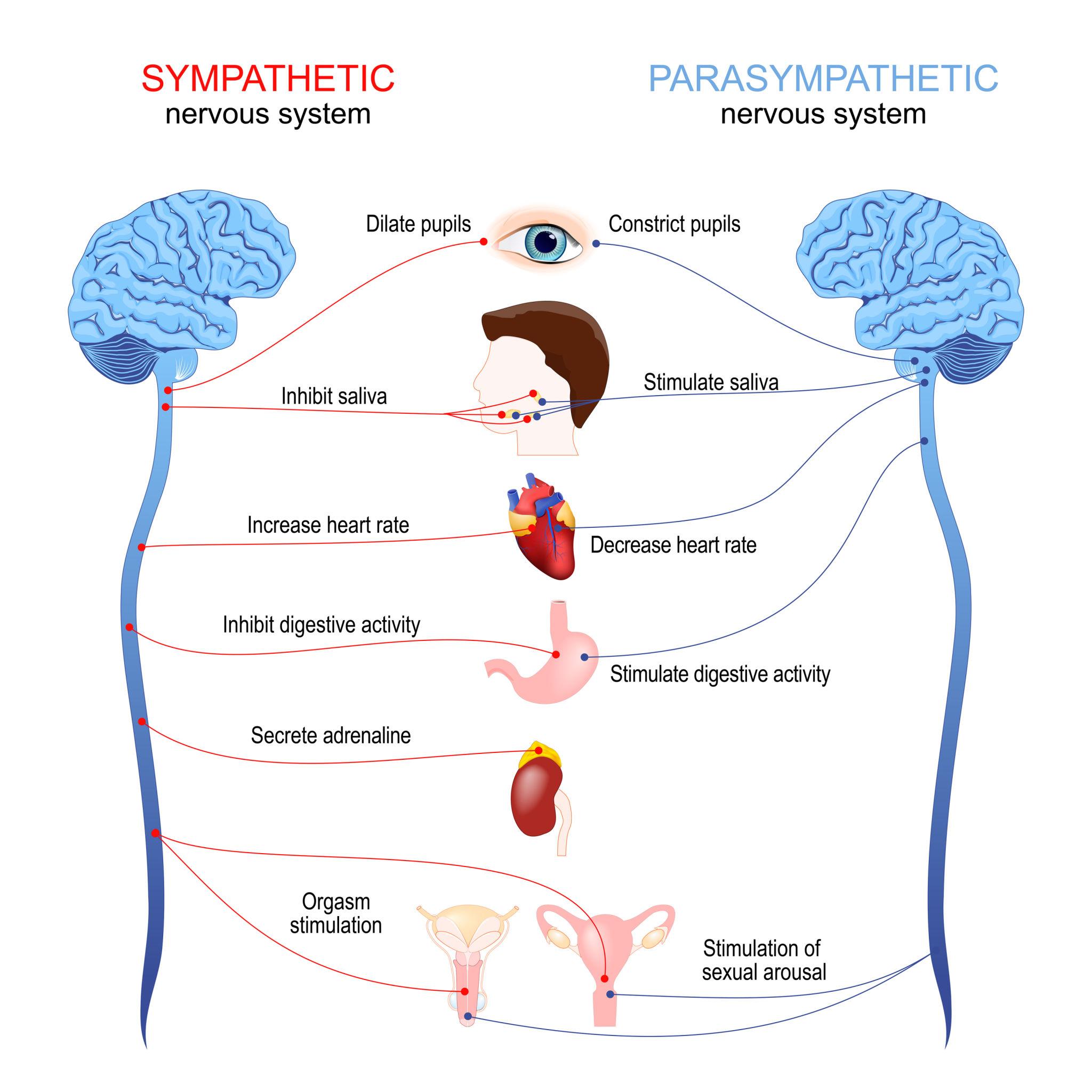
Your autonomic nervous system operates in two primary modes. The sympathetic branch activates under threat — it raises heart rate, redirects blood to muscles, sharpens immediate focus, and suppresses digestion. You know this as "fight or flight."
The parasympathetic branch does the opposite: it slows the heart, activates digestion, promotes immune function, facilitates deep sleep, and enables the sustained cognitive performance that high performers depend on. "Rest and digest."
In a healthy nervous system, these two branches shift fluidly. After a stressful meeting, you return to baseline. After difficult news, your heart rate settles. After poor sleep, your system recovers.
But here is what research from institutions including Harvard, UCLA, and University College London has firmly established: chronic, sustained stress does not merely tire you out. It can physiologically lock the autonomic nervous system into sympathetic dominance — a pattern it then struggles to self-correct from.
The vagus nerve — the longest cranial nerve in the human body, running from your brainstem to your gut and innervating virtually every major organ — is the primary highway of parasympathetic activity. When vagal tone is adequate, the nervous system downshifts after activation. When it is impaired, it cannot. The handbrake stays on. Your body stays primed for danger that never arrives.
This is not a metaphor. It is measurable physiology. Low HRV is a direct, validated biomarker of reduced parasympathetic tone — which is precisely why high performers keep watching that number refuse to move, no matter how many supplements they take or how diligently they breathe.
*Results from study populations. Individual results may vary. Source: Parasym published clinical research.
Why Every Other Intervention Has Only Taken You So Far
This is the part that frustrates my patients most, and I am going to be direct about it.

Meditation works. Breathwork works. Cold exposure works. Sleep hygiene works. I recommend all of them and the evidence is real. But here is what none of the wellness industry tells you:
For a nervous system that has been locked in sympathetic dominance for months or years — in high-functioning individuals who are simultaneously continuing to work, parent, and perform while trying to recover — these interventions face a fundamental biological limitation. They are indirect. They signal the vagus nerve through behaviour. They require a nervous system that already has enough remaining plasticity to respond.
And when someone is deep in a dysregulation loop — where poor sleep drives higher cortisol, which impairs sleep further, which increases sympathetic tone, which worsens HRV, which destroys recovery — the signal is often too weak to break the cycle. You are trying to restart a system that can no longer hear you.
Nurosym by Parasym has been studied across 50+ clinical trials with research partners including Harvard University and UCLA. It is the most studied CE-marked non-invasive vagal neuromodulation system in the world.
Review the full evidence base at nurosym.com →What the last decade of research in bioelectronic medicine has been answering is whether it is possible to act on the vagus nerve directly — not through behaviour, but through precisely calibrated electrical stimulation at the auricular branch, which runs through the ear.
The results, published across peer-reviewed journals including PLOS ONE and JAMA Network Open, have begun to fundamentally shift specialist thinking on what autonomic regulation can look like — and who can access it.
What the Research on Vagus Nerve Stimulation Actually Confirms
Implantable vagus nerve stimulators have existed for decades. The mechanism is extensively documented: direct vagus nerve activation creates measurable changes in parasympathetic tone, inflammatory markers, heart rate variability, and subjective experience of stress and recovery.
The challenge has always been access. Implantable devices require surgery. They are expensive. They are available only for specific diagnosed conditions. For the millions of people who are dysregulated but not diagnosable — who are suffering but whose labs are clean — they have been out of reach.
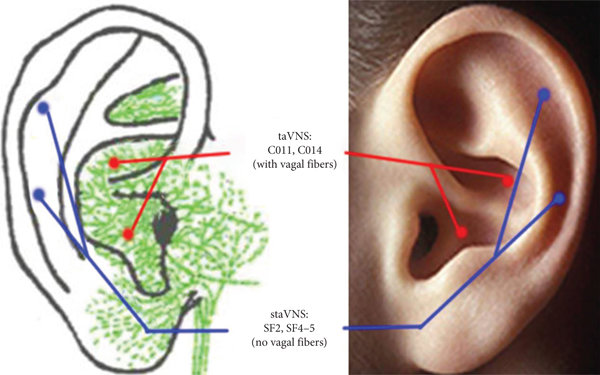
Transcutaneous auricular vagus nerve stimulation — taVNS — changes that equation entirely. The auricular branch of the vagus nerve runs through the outer ear, specifically the tragus region. Targeted electrical stimulation at this site activates the same afferent pathway as implantable devices. No surgery. No prescription. No recovery time.
A 2024 randomised clinical trial published in JAMA Network Open found taVNS to be both safe and significantly more effective than sham stimulation for chronic insomnia — a condition almost universally present in autonomically dysregulated patients. Multiple additional trials demonstrate statistically significant improvements in HRV, reductions in perceived stress, and improvements in inflammatory markers.
This is not speculative. This is not wellness marketing dressed in borrowed science. This is a validated neural pathway being activated by a clinically regulated device.
The Device That Is Quietly Disrupting How Specialists Think About Recovery
When I first became aware of Nurosym by Parasym — a CE-marked medical device that has been used across more than fifty clinical studies in partnership with institutions including Harvard University and UCLA — I paid serious attention.
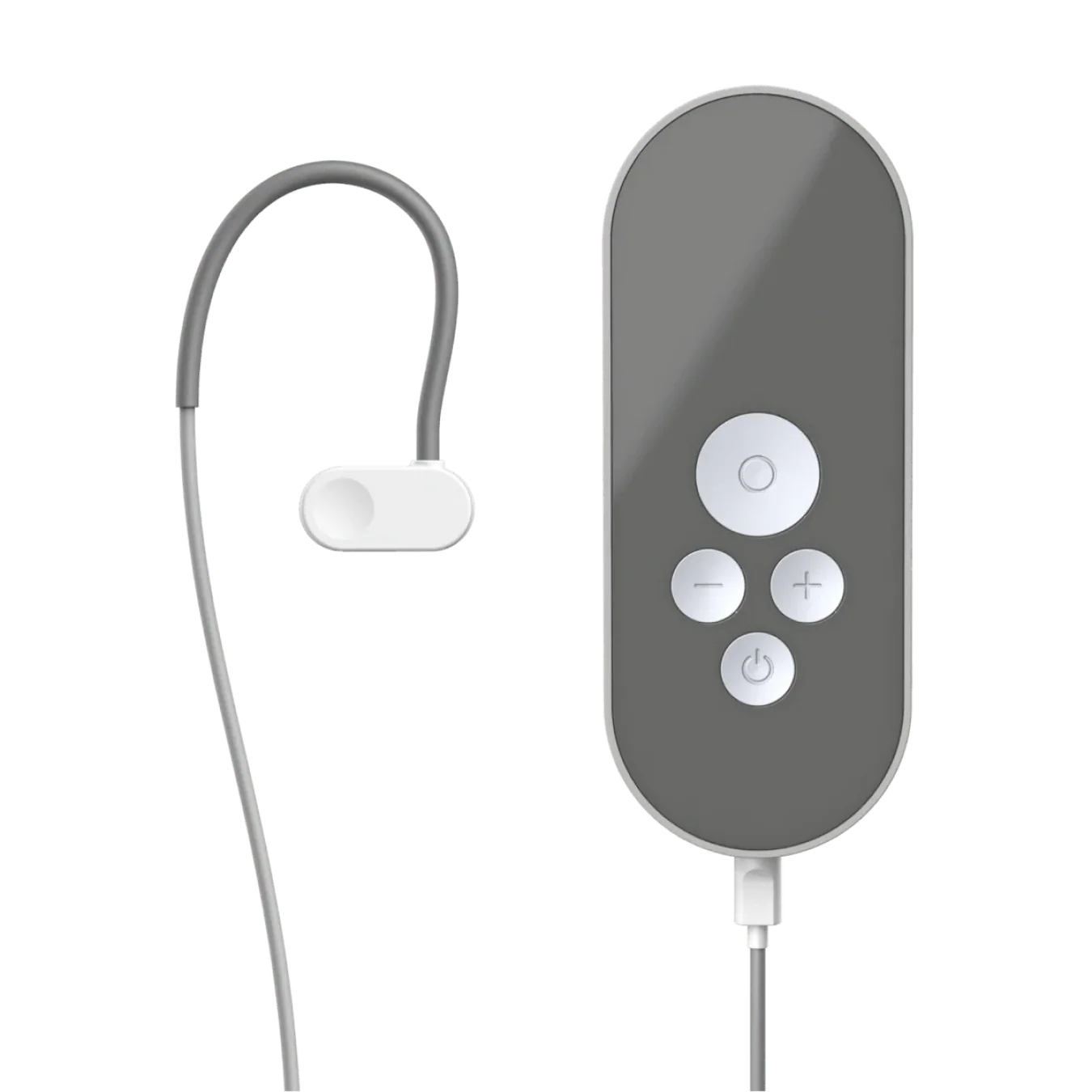
The device is worn like a headphone. A small earpiece clips to the tragus of one ear, delivering Parasym's proprietary Auricular Vagal Neuromodulation Therapy (AVNT™) for thirty to sixty minutes per day. The sensation users describe: a mild, pleasant tingling. In clinical studies to date, there have been zero serious adverse events recorded.
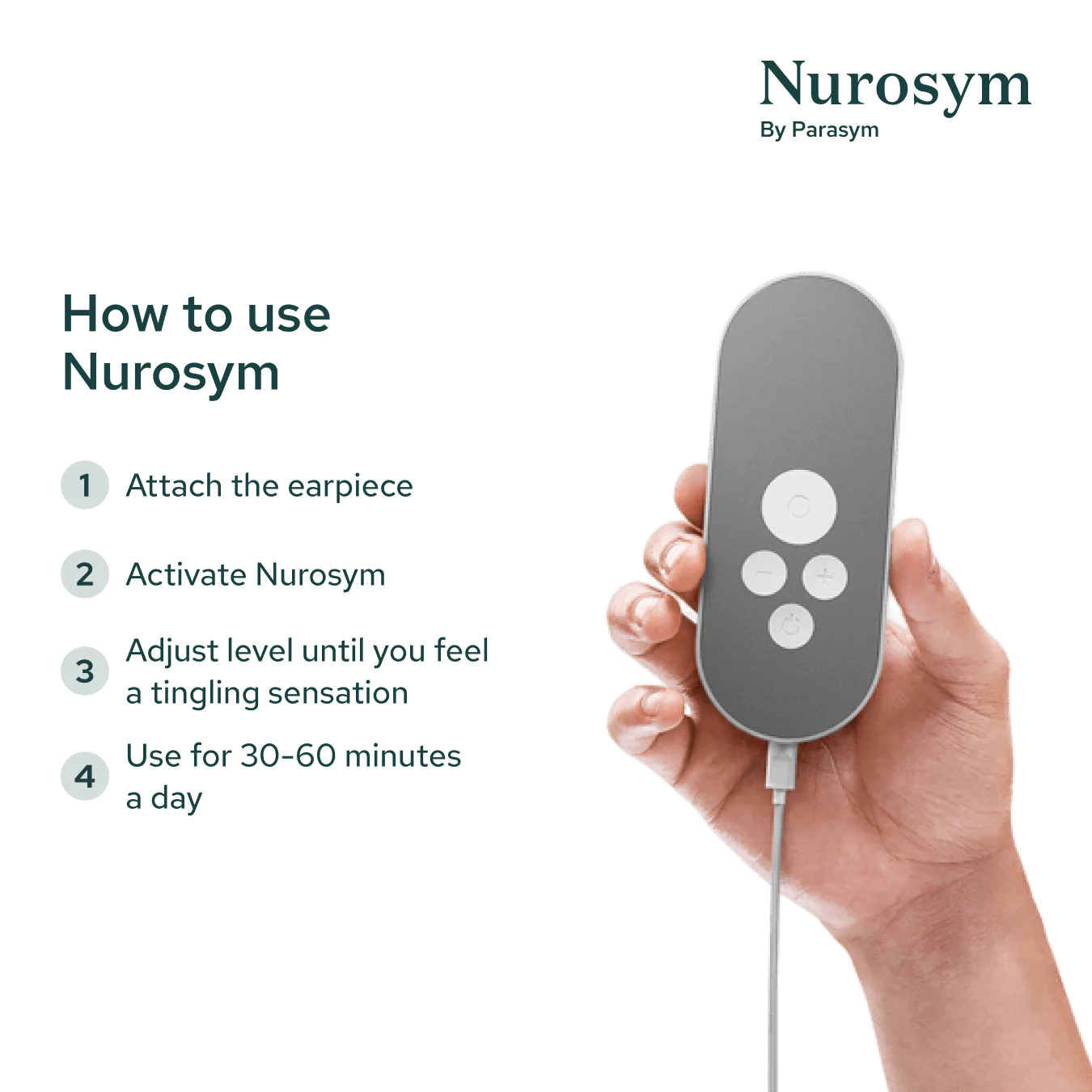
Nurosym is CE-marked as a medical device in Europe. It holds Non-Significant Risk designation across multiple studies. Its trials are conducted to ICH-GCP standards — the same standards applied to pharmaceutical drug trials. These are not marketing claims. They are a documented regulatory and evidential audit trail that means something to clinicians — and should mean something to you.
*Results from study populations. Individual results may vary. Source: Parasym published clinical research.
What Happened When I Started Recommending This to My Patients

I do not recommend devices lightly. Too many of my patients — intelligent, well-researched people — have wasted money and, more damagingly, wasted hope on products dressed in the language of science without its substance. When someone has already cycled through years of half-solutions, another disappointment does not just cost money. It costs them a piece of their willingness to try again.
So when I began suggesting Nurosym to a cohort of patients in late 2023, I did so with deliberate expectations-setting. What I observed over the following months was striking — and I will not dress it up beyond what the evidence supports.
Some patients reported meaningful shifts within the first two weeks: improved sleep onset, less reactive stress responses, a quality several described as "the background noise finally turning down." One patient — a 44-year-old software engineer whose HRV had sat below 30 for three years — measured a sustained improvement to the mid-40s after six weeks of daily use, correlating with the most stable sleep period he had ever recorded on a wearable.
A woman in her late thirties with post-viral fatigue following COVID-19 reported the most consistent energy she had experienced in two years after adjusting her daily session duration through the first month. One patient with a long-standing insomnia presentation reported, for the first time in four years, falling asleep without racing thoughts before she had finished the session.
What I will say with precision is this: in patients whose primary presentation is autonomic dysregulation — the wired-but-tired profile, the stubborn HRV, the unrestorative sleep, the unpredictable gut, the cognition that used to be effortless and now requires constant management — the mechanism of taVNS is precisely matched to the pathology. That alignment, in medicine, is where meaningful outcomes come from.
Nurosym is available with a 30-day money-back guarantee. If daily use over thirty days does not deliver benefit you can feel — you pay nothing. That is what genuine confidence in clinical evidence looks like.
Secure your Nurosym at nurosym.com →The Questions I Hear Most Often — Answered Directly
No — and the distinction matters more than most people realise. TENS devices deliver non-specific electrical stimulation for localised pain relief. Nurosym delivers precise, calibrated stimulation to the auricular branch of the vagus nerve using parameters developed and validated across fifty-plus clinical trials. The target is a specific neural pathway. The mechanism is activation of the parasympathetic nervous system. Comparing them is like comparing a general antibiotic to a targeted therapy — the same broad category, categorically different mechanism and evidence base.
To some extent, yes — and I encourage it. Diaphragmatic breathing activates the vagus nerve through a behavioural pathway and the evidence is solid. But for a nervous system in prolonged dysregulation, indirect methods routinely fail to overcome the inertia of the cycle. Direct neuromodulation provides a targeted, consistent physiological signal that does not require the nervous system to already have sufficient plasticity to respond. Most Nurosym users I work with continue breathwork alongside it — the two are complementary, not competing.
This is the most important question — and the right one to ask. Individual response varies. The evidence is in population-level studies. Nobody can guarantee your personal outcome. What Parasym offers is a 30-day money-back guarantee for people who use the device daily and do not find benefit — which is the structurally appropriate risk reversal for a device at this price point and evidence level. It converts the question from "will this work?" to "is thirty days worth finding out?" For most people who have already spent years and considerably more money on solutions that did not work — the answer is obvious.
CE-marked as a medical device. Non-Significant Risk designation across multiple studies. Zero serious adverse events recorded across its clinical trial programme. Contraindications — implanted electronic devices, active epilepsy, pregnancy — are clearly published. Outside of these, the safety profile is well-characterised by a substantial body of clinical evidence. This is not a consumer gadget with a medical-sounding name. It is a regulated device with a documented safety record.
What Your First Thirty Days Actually Looks Like
I want to set realistic expectations — because the most damaging thing I can do is overpromise and have you dismiss a meaningful intervention because week one was quieter than you expected.

You are finding the stimulation level that produces the characteristic mild tingling without discomfort, integrating thirty minutes into your daily routine. Some people feel a subtle shift in calm or sleep quality within days. Others notice nothing obvious yet — that is entirely normal and does not predict outcome.
This is typically where early responders notice something objective: a change in sleep architecture, a lower resting heart rate, a stress response that recovers more quickly than it used to. If you are tracking HRV, this is the window where early measurable changes tend to emerge. Several of my patients describe week two as the first time in months they woke up feeling like sleep had actually done something.
By week four, most patients who are going to respond have registered something they can articulate. Not a transformation — a change in baseline. A nervous system that feels slightly less braced for impact. A quality of rest that is qualitatively different. An afternoon cognitive window that did not used to exist. This is what regulated nervous system function actually feels like when you have been without it long enough to have stopped remembering what it was like.

This Is Not for Everyone. But If It Is for You, You Already Know.
Nurosym is not a treatment for a specific diagnosed condition. If you have a cardiac arrhythmia, a diagnosed autoimmune disorder, or a specific neurological condition, your treatment decisions belong in a clinical consultation.
What Nurosym is precisely designed for is the profile that falls between diagnosable conditions and genuine health: the person whose labs are normal but whose lived experience is not. The person whose autonomic nervous system is measurably dysregulated. The person who has exhausted the conventional toolkit and is still, stubbornly, not well.
If the following sounds like you — you are not imagining it, and there is a physiological reason for it:
Chronic fatigue and low energy that does not respond to rest. Disrupted or unrestorative sleep despite good sleep hygiene. Stress and anxiety that feel physical rather than situational. Brain fog and cognitive inconsistency that was not there two or three years ago. Digestive irregularity that tracks with stress states. An HRV that refuses to improve regardless of what you do.
If you read that list and felt the particular recognition of someone describing your own life — then the mechanism of what Nurosym does is directly relevant to what is happening in your body. And you have been waiting long enough.
A Final Word on Why This Matters More Than You May Realise
The autonomic nervous system does not appear in most health conversations. It has no celebrity advocates, no cultural moment, no dramatic before-and-after photographs. It governs processes that are invisible until they stop working — and then, when they do stop working, the experience is almost impossible to communicate to someone who has not lived it.
What I have tried to give you in this article is something more valuable than a product recommendation: a name for what you are experiencing, a mechanism that explains it, and a physiologically grounded reason for action — not the manufactured hope of miracle claims, but the quieter, more durable confidence of understanding what is actually wrong and knowing that a targeted, clinically validated intervention exists that addresses the root cause directly.
Your nervous system is not broken. It is dysregulated. Those are not the same thing. Dysregulation, by definition, can be corrected. You now have the science that explains why. You now have access to the device that delivers it.
The only question left is how much longer you are willing to wait.
Start Today.
Join over 4 million user sessions. Backed by research from Harvard and UCLA. Risk-free for 30 days.
 GET NUROSYM NOW
 Dr. Sarah Holloway, Ph.D.
Neuroscientist and clinical researcher with fifteen years of experience in autonomic nervous system disorders. Formerly with the Department of Neuroscience at Johns Hopkins University. Consults with specialist clinics across the US on non-pharmacological interventions for autonomic dysregulation.